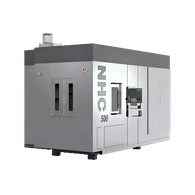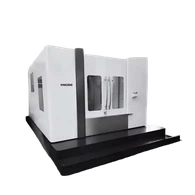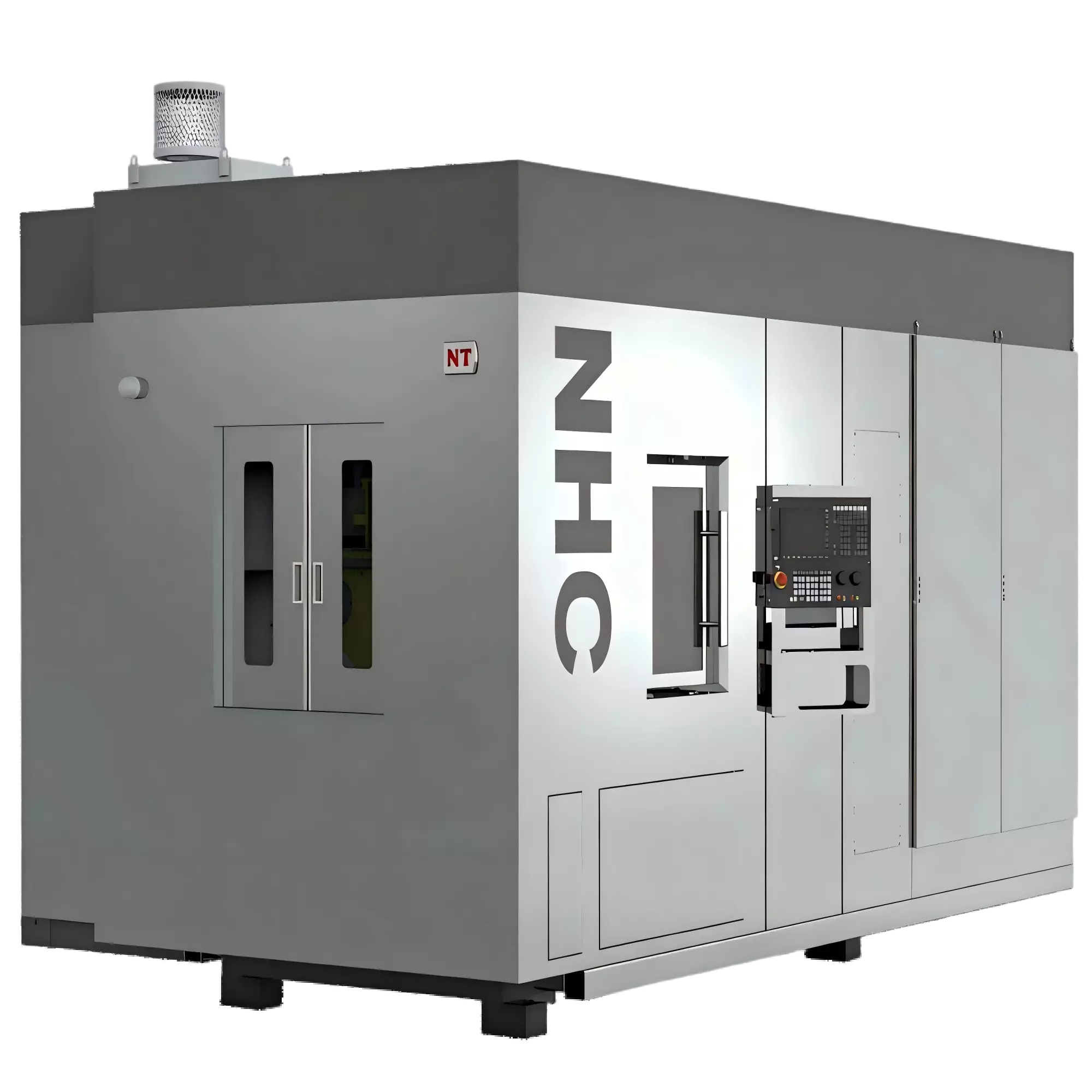
What is CNC Horizontal Machining Center
The horizontal machining center plays a vital and irreplaceable role in contemporary manufacturing sectors. It offers a range of benefits, such as advanced high-precision CNC machine tools, multi-axis control systems, and rotary work tables. In contrast to conventional vertical machining centers, it stands out with its horizontal design, enabling tools to carry out machining vertically. This configuration results in features like rapid high-speed cutting, exceptional precision, and heightened efficiency.
Perfect for complicated projects
If your materials are and require additional groove, a horizontal mill is a perfect option. Due to the mechanical design, it may serve as three machining tools simultaneously. Therefore, manufacturers consider it valuable for productivity and time savings.
Faster processing
Horizontal machining is a better choice if you need to cut quickly and make several items at once. The beds' ability to mill at various angles provides increased speed as well.
Chip evacuation
Horizontal machining's chip evacuation is adequate. Higher surface finishes, less subsequent fabrication, and longer tool life are all guaranteed since gravity aids in the chip's descent. Furthermore, chip removal is simple for operators.
Rigidity
Machines on the horizontal plane are rigid because they are designed to handle production at bigger volumes and with shorter lead times. Additionally, they barely vibrate and deflect at all.
Where is the CNC Horizontal Machining Center Used For
Drilling & Tapping
Drilling and tapping are one of the most common applications of a horizontal machining center. This process involves using a combination of both cutting tools and spindle power to produce threaded holes. In this process, the spindle rotates the tool while the table feed moves the workpiece, creating a hole with the desired diameter and threading. Drilling and tapping is a precise and repeatable process that can quickly produce a high-quality result. It is often used to create threaded holes in aluminum and steel parts.
Milling & Profiling
The second application of a Horizontal Machining Center is milling and profiling. This process involves cutting away material from the workpiece in order to make it the desired shape. It can be used to create complex shapes, contours, and slots. This method is often used in the production of aerospace components and intricate mechanical parts, as well as in designing molds and dies. The cutting tool is usually held stationary while the workpiece is moved around the tool in order to achieve the desired shape. This process is highly accurate and efficient, and can be used in multiple axis operations for increased efficiency.
Facing & Counterboring
The horizontal machining center is one of the most versatile pieces of equipment used in manufacturing and industrial environments. One of the key operations it can perform is facing & counterboring. This is the process of creating a flat surface on a part and then counterboring a hole or holes into the surface. This is commonly used to create holes that are the same diameter as the part, as well as giving the part a flat face. The horizontal machining center is capable of performing this operation quickly and accurately, making it an essential part of any shop floor.
Reaming & Counterboring
Reaming and counterboring are two important processes that can be achieved with the help of a horizontal machining center. Reaming involves creating a smooth and accurate hole in the workpiece, while counterboring removes material from the outer edge of an existing hole in order to accommodate a larger-diameter fastener. Both processes are essential in many applications, such as the manufacturing of automotive components, and can be done with great accuracy and repeatability on a horizontal machining center. This is thanks to the machine's high-rigidity spindle, long tool reach, and advanced cutting parameters that can be easily controlled.
Thread Cutting & Chamfering
Thread cutting and chamfering can be handled by a horizontal machining center in order to produce internal and external threads of different shapes and sizes. The machining center is equipped with a rotating spindle, which is used to cut the threads in a steady, controlled manner. The cutting process is monitored and controlled by an on-board computer, which continuously adjusts the speed and feed rates to produce the desired thread profile. Additionally, it can also be used to chamfer the edges of a workpiece, creating a cleaner and more professional finish.
The environment for installing the horizontal machining center
The horizontal machining center should be installed in a place far from the source of vibration, not directly exposed to sunlight, without heat radiation and without humidity. If there is a source of vibration near the place where the horizontal machining center is installed, a shock-proof ditch should be set around the horizontal machining center. If the shock-proof ditch is not set, it will directly affect the machining accuracy and stability of the horizontal machining center. After a long time, it will affect the poor contact of electronic components, malfunctions, and affect the reliability of the horizontal machining center.
Strict control of voltage and current
Horizontal machining centers are generally installed in the processing workshop, and there are many CNC mechanical equipment in the processing workshop, which inevitably leads to large fluctuations in the power grid. Therefore, the location where the horizontal machining center is installed needs to strictly control the voltage and current of the power supply, and the voltage and current of the power supply must be controlled within the allowable range of the horizontal machining center. It is necessary to keep the voltage and current of the power supply stable, otherwise it will directly affect the normal operation of the horizontal machining center.
Temperature and humidity will directly affect the horizontal machining center
The horizontal machining center generally needs to work normally under the environment of less than 30 degrees celsius. Generally, there are exhaust fans and air coolers set up in the distribution box of the horizontal machining center to ensure that the electronic components and the central processing work in a constant temperature state. If the temperature and humidity are too high, the service life of the components of the control system will be reduced, resulting in an inexplicable increase in the number of faults of the horizontal machining center. If the humidity increases, the dust will increase on the integrated circuit board, which directly leads to the occurrence of faults such as poor contact and short circuit.
The factory parameter settings of the machine tool
When customers use the horizontal machining center, they cannot change the factory parameter settings of the machine tool at will, because these factory parameter settings are directly related to the dynamic characteristics of each part of the horizontal machining center. Only the clearance compensation parameter value can be set according to the actual situation. If the factory setting parameters are to be changed, the manufacturer should be contacted and the operation to change the factory setting parameter settings should be carried out under the guidance of the manufacturer's technical personnel.
As a modern technological piece, the horizontal machining center features several distinguishing developments. These allow the machining centers to operate with high efficiency and precision. Its primary parts and components include:
Frame: Consisting of the base and column, the frame of a horizontal machining centers supports the entire machine. The horizontal machining center frame is made from rigid material capable of absorbing vibrations during operation.
CNC: As the driving force of a horizontal machining center, you find the CNC system interprets and executes machining designs. The CNC system is behind the automatic operation of the spindle and tool change.
Spindle: The spindle is housed within a head and holds the cutting tool when operating. The spindle can rotate and in a horizontal machining center, you find it moves up and down.


Worktable: The worktable is where you place the workpiece during operation. You can find rotating worktables allowing you to turn the workpiece for multi-sided machining.
Tool magazine: You utilize a tool magazine for tool storage in your horizontal machining center. A tool magazine allows you to conveniently access different tools during operations.
Control panel: Through a control panel, you can interact with the horizontal machining center parameters. You can input commands and set parameters while monitoring the machining process.
Regular maintenance and upkeep
Regular maintenance and upkeep is crucial for preventing downtime in CNC horizontal machining centers. Neglecting these tasks can lead to costly breakdowns and repairs due to worn-out or damaged components. Bearings, motors, and belts should be regularly inspected, cleaned, and replaced if necessary. Lubrication of moving parts is also important for extending the life of equipment and preventing downtime. Additionally, programming errors, operator mistakes, and improper tool selection can cause downtime, so it's essential to regularly review and assess these areas. By establishing a maintenance schedule and conducting routine inspections and cleaning, you can ensure that your CNC machines are operating at their best and minimize any unexpected interruptions in production. Investing in quality parts and equipment is another important factor in reducing downtime and will be discussed in the next section.
Investing in quality parts and equipment
Investing in quality parts and equipment is paramount in reducing downtime in CNC horizontal machining centers. While regular maintenance and upkeep are essential for preventing breakdowns, investing in quality parts and equipment can significantly reduce the risk of unexpected downtime. Choosing high-quality components such as bearings, motors, and belts can ensure that your machines perform consistently and efficiently, minimizing the risk of failures. Quality equipment can also withstand heavy use and reduce wear and tear, leading to longer service life and fewer replacements. By investing in quality parts and equipment, you can reduce the likelihood of unexpected downtime and ensure that your machines operate at their best.
Streamlining processes and reducing human error are also crucial in preventing costly interruptions in production. By optimizing processes and minimizing the risk of operator error, you can reduce the time required to complete jobs and maximize productivity. In the next section, we'll discuss how to streamline processes and reduce human error in CNC horizontal machining centers.
Streamlining processes and reducing human error
By optimizing processes and minimizing the risk of operator error, you can reduce the time required to complete jobs and maximize productivity. One way to streamline processes is by clearly defining standard operating procedures for each job and ensuring that all operators are trained and certified to follow them. This not only reduces the likelihood of errors but also ensures that all operators are working consistently and efficiently. Another effective strategy is to implement automation wherever possible. Automating routine tasks such as tool changes and part loading not only speeds up production but also reduces the risk of human error.
Reducing human error is also critical in preventing downtime. One way to do this is by implementing a quality control program that checks parts for accuracy and consistency before machining begins. This ensures that all parts meet specifications and reduces the risk of errors during the machining process. Additionally, providing operators with clear instructions, checklists, and error-proofing tools such as sensors and alarms can help minimize mistakes and improve overall efficiency.
By streamlining processes and reducing human error, you can minimize the risk of downtime and optimize production. In the next section, we'll discuss how to implement a proactive approach to machine monitoring to further prevent interruptions in production.
Implementing a proactive approach to machine monitoring
By ensuring that your CNC horizontal machining centers are functioning at their best, you can prevent costly interruptions in production. However, sometimes even the most well-maintained machines can still experience downtime. To further prevent this, you can implement a proactive approach to machine monitoring.
Machine monitoring involves collecting data from your machines in real-time, allowing you to identify potential issues before they become major problems. By using sensors and other monitoring tools, you can track a variety of variables such as temperature, vibration, and tool wear. This information can then be analyzed to identify patterns and predict potential failures.
One advantage of machine monitoring is that it allows you to schedule preventive maintenance at the best possible time, minimizing the impact on production. It also enables you to make data-driven decisions about when to replace worn-out parts, reducing the likelihood of unexpected downtime.
To implement a proactive approach to machine monitoring, you may need to invest in new equipment or software. However, the benefits of reducing downtime and optimizing production can make this investment worthwhile. By combining a quality control program with a proactive approach to machine monitoring, you can minimize the risk of downtime in your CNC horizontal machining centers. This will not only save you money but also help you meet your customers' delivery expectations and maintain a competitive edge in the industry.
Hot Tags: cnc horizontal machining center, China cnc horizontal machining center manufacturers, suppliers, factory, Gantry and Parts Handling, Turnkey Solution, Gantry Robot Of Aerial Traveling, horizontal machining center, Engine Cylinder Block, cnc machining center